We partnered with
Rotex Technologies to deliver a digital manufacturing feasibility study for
Sellafield Ltd, providing the digital engineering, 3D visualisation, and immersive VR capability needed to evaluate and de-risk a proposed Final Assembly Line (FAL) for high-volume nuclear waste containers.
Using our immersive digital tools, we transformed engineering concepts into an interactive, full-scale 3D and VR model of the proposed assembly line. This allowed Sellafield teams to explore layout, workflow, and manufacturability in detail, giving stakeholders the confidence to assess and refine the concept before committing to physical infrastructure.
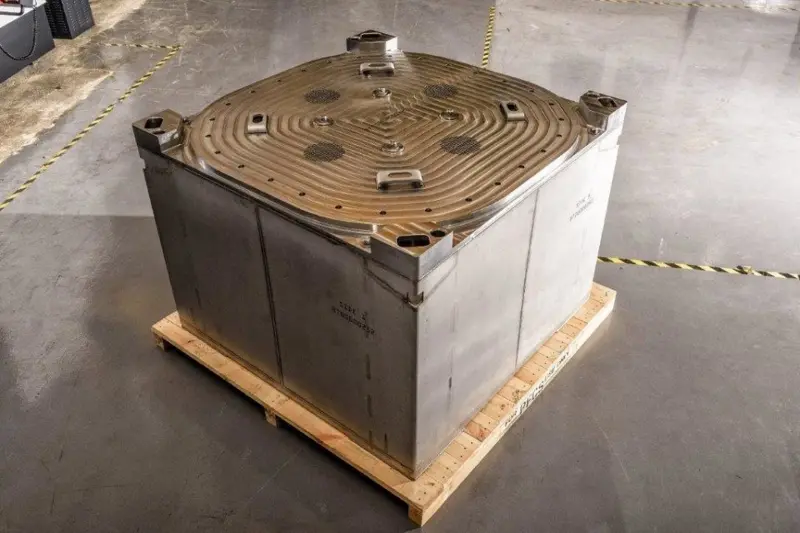
The study supports Sellafield Ltd’s decommissioning and waste management programmes, which require more than 35,000 stainless steel containers across multiple product variants.
To deliver this volume efficiently, Sellafield is evaluating a first-of-its-kind dedicated FAL facility designed to receive standardised and bespoke components and assemble complete packages in line with project milestones.
By combining Rotex’s engineering design and analysis expertise with our advanced 3D and virtual reality modelling, we delivered immersive digital environments that were both time- and cost-efficient. Our work provided the technical and visual clarity needed to assess production flow, inspection processes, and spatial constraints at an early stage, reducing risk and improving decision-making in a highly regulated nuclear environment.
This project demonstrates how we use immersive digital solutions to support the nuclear sector’s decommissioning mission, bringing greater efficiency, confidence, and insight to complex manufacturing challenges. It also exemplifies the value of the LINC scheme, enabling SMEs like ours to collaborate, innovate, and contribute meaningfully to the UK’s nuclear supply chain.
Future implementation involves building on the successful delivery of the initial 3D and VR concept. This will focus on refining the immersive model to further optimise assembly time and production output, while developing preliminary designs for bespoke equipment and tooling required for the physical facility.
In parallel, we will carry out location analysis to assess logistics, workforce availability, and infrastructure requirements, alongside proposing layout refinements to mitigate any identified bottlenecks. A comprehensive health and safety review will define the necessary controls and facility-specific requirements.
Together, this work will provide Sellafield with a clear, evidence-based roadmap to progress the Final Assembly Line concept towards implementation, supporting the long-term delivery of critical infrastructure for the UK’s nuclear decommissioning mission.